
Beginner, intermediate, advanced. Nobody knows what those words mean.
The International Surf Levels describe what you can and cannot do yet, at every stage of surfing. Observable. Evaluable. The same approach languages use with CEFR and martial arts use with belts.
The ISL is an open international standard for surfing skill, currently in its open construction phase. ESC uses and helped initiate it, the way a language academy uses the CEFR.
For 100 years, surf feedback has been vague
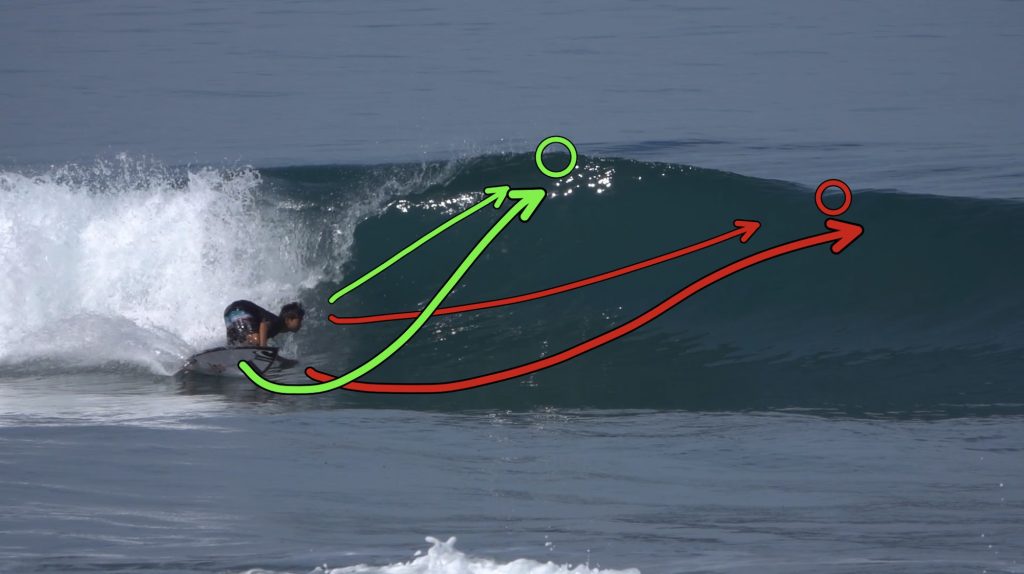
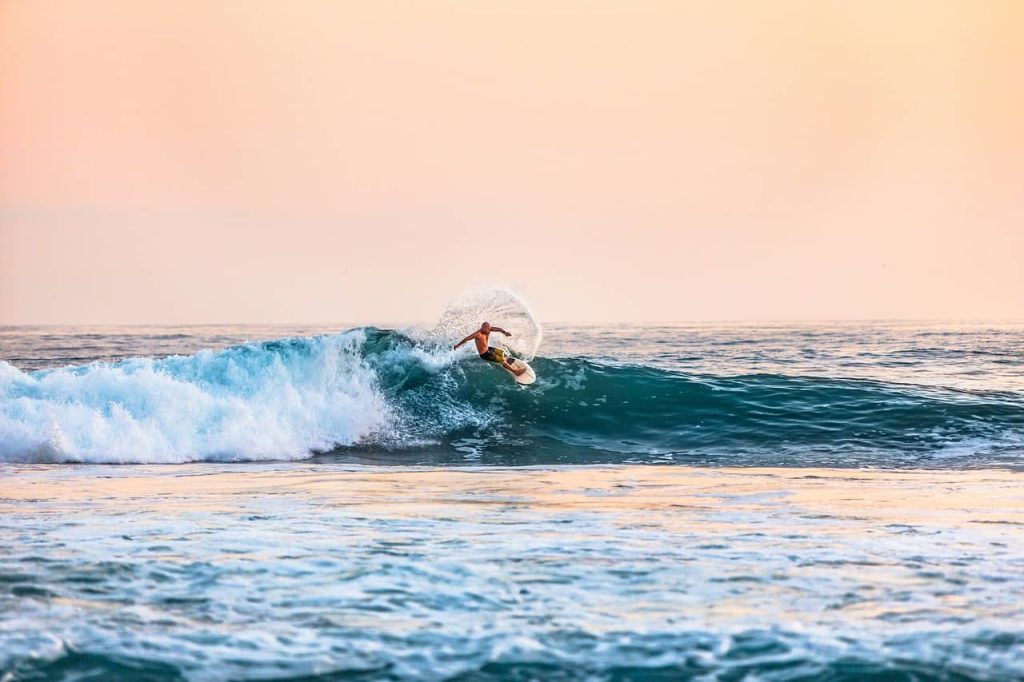
Work on your turns. Get lower. Commit more.
Nobody improves with feedback like that, because nobody can tell you what it means in practice, in your next session, at your level.
ISL replaces vague advice with descriptors you can observe on any wave. You either can do the thing or you cannot yet. And if you cannot yet, you know exactly what comes next.
The 3 Pillars
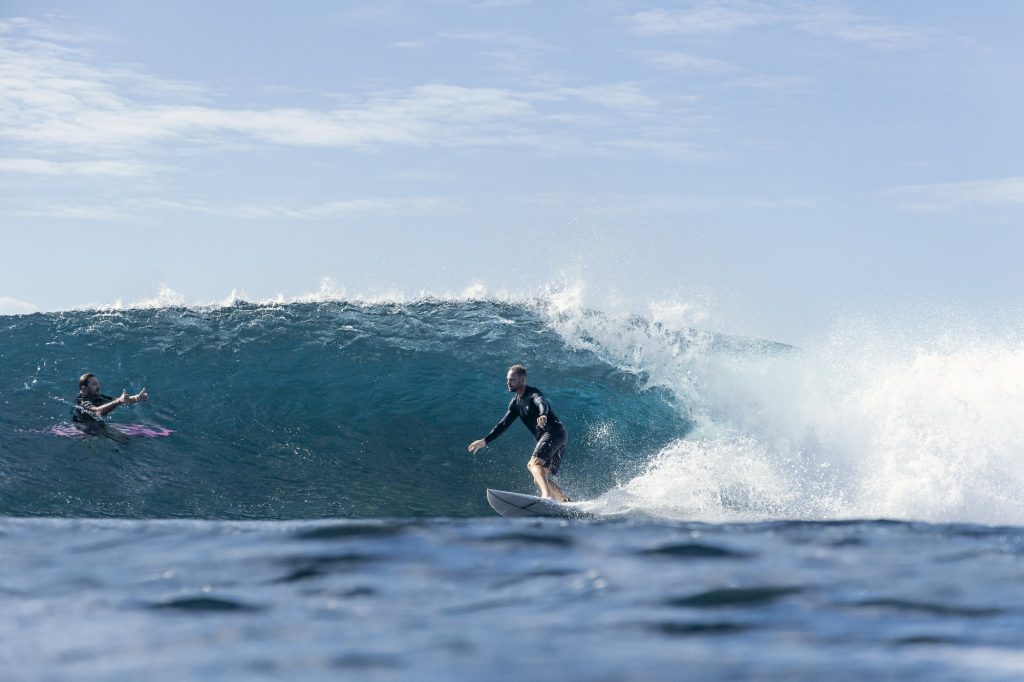
Every level of surfing is built on the same three technical foundations. This is how we coach them.
Eyes
Where you look and when.
Compression
How your body loads and releases power.
Arms
How your upper body drives direction and balance.
The 7 International Surf Levels
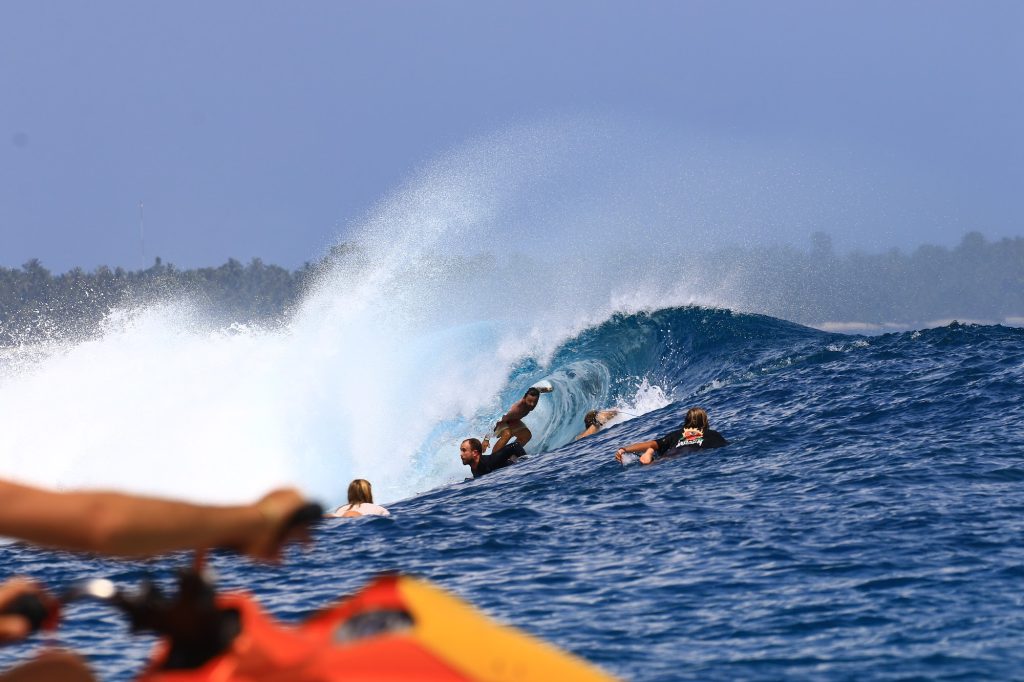
Each level is described across five observable dimensions: take-off, line, momentum, vision and ride continuity. Tap a level to see what it looks like in the water.
1The goal is the take-off
Standing up on broken waves
- Take-off: Can stand up on a broken wave and reach a functional standing position.
- Line: Can travel in the direction the wave pushes the board without immediately falling.
- Momentum: Can maintain forward movement generated by the wave while standing.
- Vision: Can keep eyes directed forward rather than looking down at the board or feet.
- Ride Continuity: Can complete a ride on a broken wave from take-off to a natural end without falling immediately after standing.
2The wave moves the surfer
First green waves, riding the open face
- Take-off: Can take off on unbroken green waves and reach a standing position.
- Line: Can maintain a continuous line along the open wave face after standing.
- Momentum: Can maintain forward momentum along the wave face with the board visibly moving through the water.
- Vision: Can keep eyes directed toward the open wave face for the majority of the ride.
- Ride Continuity: Can ride along the open face of the wave without immediately straightening toward shore.
3The surfer begins to move the board
Steering, speed, reading the next section
- Take-off: Can take off on unbroken green waves and move directly into the first line of the ride.
- Line: Can direct the board along a chosen path on the wave face, adjusting trajectory in response to the wall.
- Momentum: Can generate and maintain speed within a section of the wave face.
- Vision: Can look ahead to the next section of the wave rather than only at the current position on the board.
- Ride Continuity: Can complete a functional ride from take-off to the end of the wave, adapting to minor changes in the wall without losing the wave.
4The surfer uses the board to manage the wave
First real turns, moving on the face with intent
- Take-off: Can take off on unbroken green waves and set the initial direction of the ride with control.
- Line: Can adjust trajectory continuously along the wave face, moving up and down the wall to stay in the functional section.
- Momentum: Can preserve and recover speed while moving through multiple sections of the wave.
- Vision: Can look several metres ahead on the wave, reading the next section before reaching it.
- Ride Continuity: Can execute a directional change or basic turn as a functional response to the shape of the wave.
5The surfer begins to manage the whole ride
Linking manoeuvres, planning the full wave
- Take-off: Can take off on unbroken green waves in a variety of conditions and enter the ride with the speed and position the first section requires.
- Line: Can choose a line from the start of the ride and adjust it as the wave develops.
- Momentum: Can generate, lose and recover speed to prepare the next section of the ride.
- Vision: Can read multiple sections of the wave ahead, linking decisions across the full length of the ride.
- Ride Continuity: Can connect two or more manoeuvres as part of a continuous ride.
6The surfer adapts the whole ride to the wave
Demanding waves, speed as a tool
- Take-off: Can take off on demanding unbroken waves and enter the ride without interruption to the chosen line.
- Line: Can redesign the line continuously in response to how the wave changes.
- Momentum: Can use speed as a tool, accelerating, slowing or repositioning the board to arrive at each section with the speed the section requires.
- Vision: Can read the full wave and anticipate how it will develop, adjusting the ride before changes in the wall occur.
- Ride Continuity: Can connect manoeuvres by adapting the sequence to the changing shape of the wave.
7Complete control throughout the ride
No visible breaks between decisions
- Take-off: Can take off on demanding unbroken waves and transition directly into the first section of the ride without interruption.
- Line: Can maintain a continuous line from the start to the end of the wave without visible breaks between sections.
- Momentum: Can maintain or modify speed continuously throughout the ride without depending on the wave to restore it.
- Vision: Can anticipate and respond to the full development of the wave, with decisions appearing consistently ahead of changes in the wall.
- Ride Continuity: Can produce a ride in which transitions between manoeuvres maintain speed and direction without visible interruption.
Find your ISL level
Answer honestly, wave by wave, and you will get your estimated ISL level plus the one thing to focus on next.
Takes about 3 minutes. Be honest with yourself: the level only helps if it is real.
For each statement, mark how it applies to your surfing today, not on your best day ever.
Confidently means you do it on most waves. Sometimes means it happens but you cannot repeat it at will.
The system behind the levels is coming
ESC Academy is the online academy built on ISL: know your level, know what to work on, and bring one clear focus to every session.
It opens after September 2026. The waiting list hears everything first.
Built by Ivan Villalba. Coaching since 2002. He has coached WSL athletes, an Olympic qualifier and national team surfers.